
Why Jamkhambhaliya is Famous for Ghee? The Ghee Capital of India
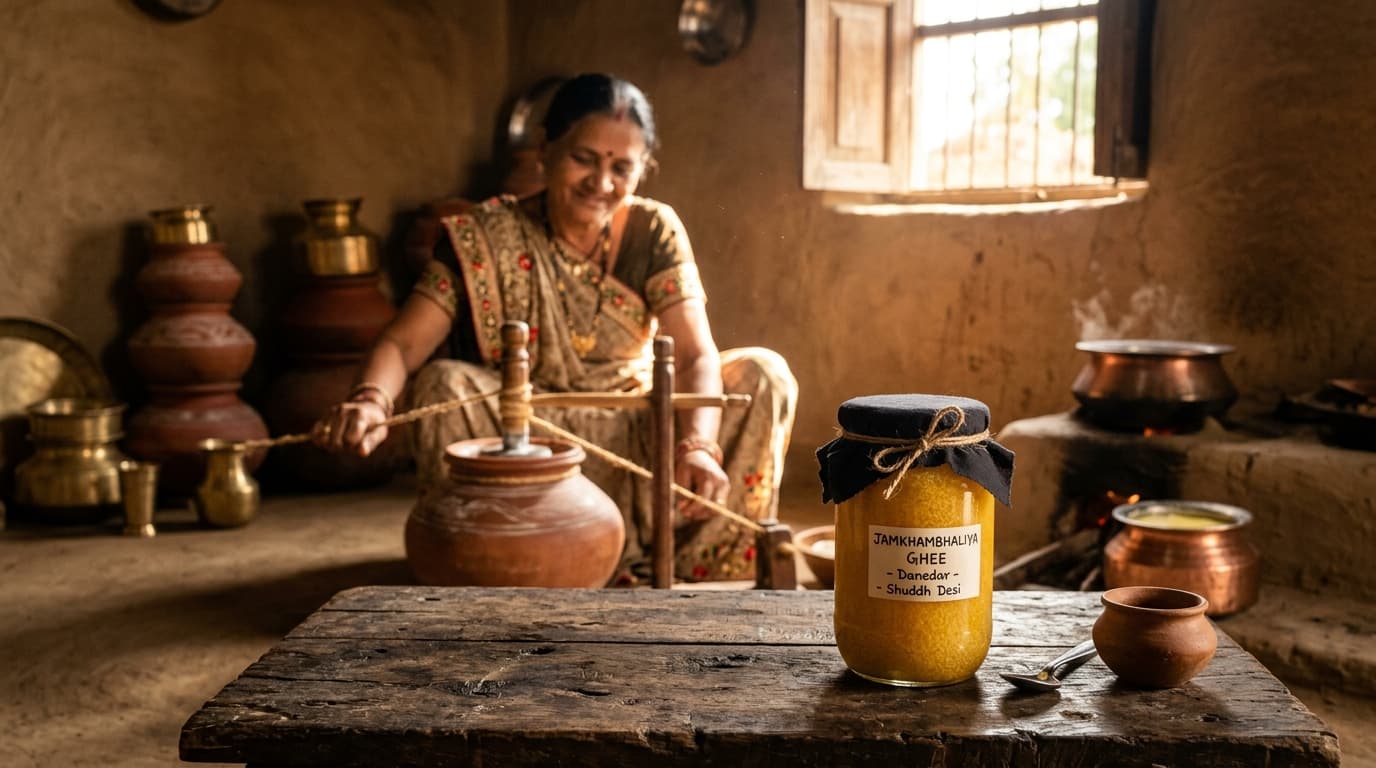
In the heart of Devbhumi Dwarka district in Gujarat lies a town that has become synonymous with purity and taste: Jamkhambhaliya. For centuries, this historic town has held the unshakeable title of the "Ghee Capital of India". But what makes Jamkhambhaliya Ghee so special and sought-after across the globe?
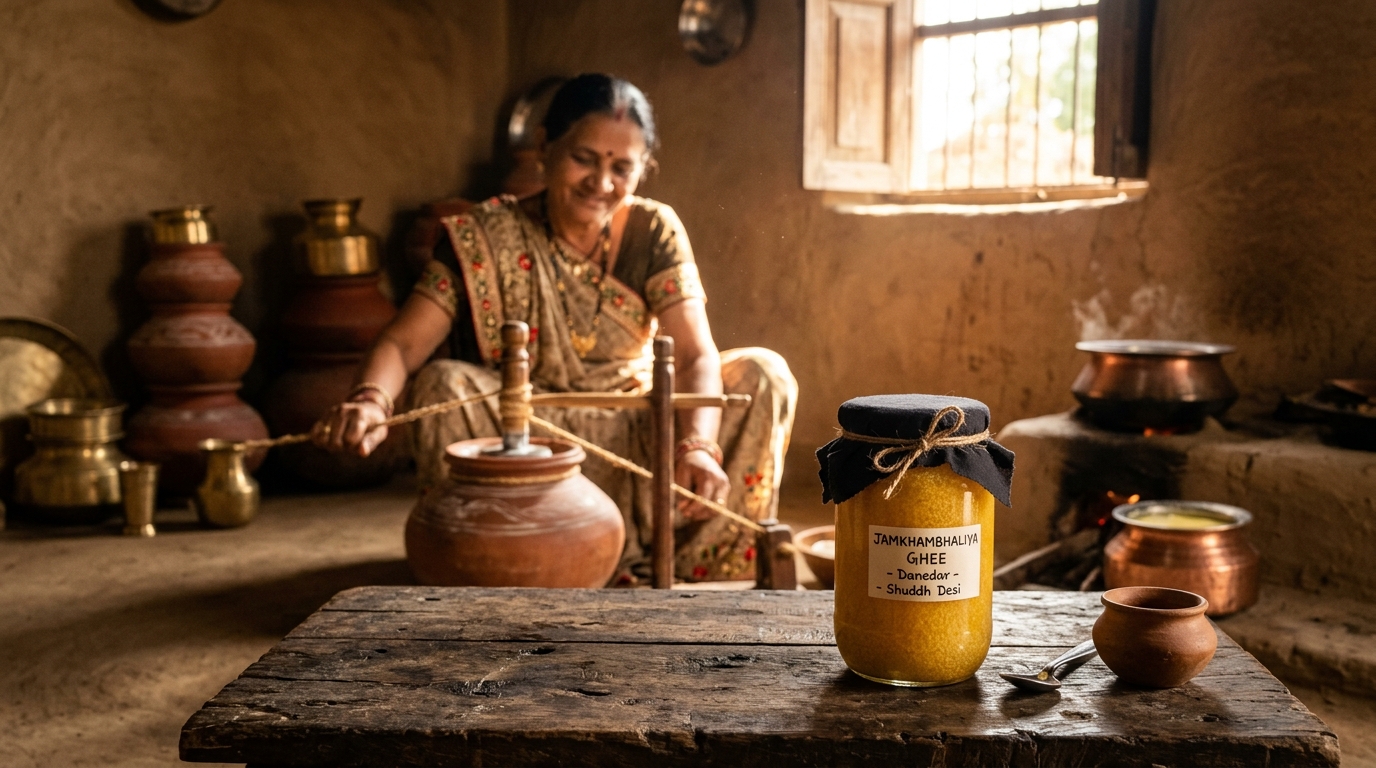
Authentic Jamkhambhaliya Bilona Ghee: Handcrafted in Devbhumi Dwarka, Gujarat
1. The Legendary Maldhari Pastoralist Community
The secret of Jamkhambhaliya's ghee begins with the Maldhari community—traditional semi-nomadic herdsmen of Saurashtra. For generations, Maldharis have raised indigenous livestock on the mineral-rich grasslands of coastal Gujarat. Their cows and buffaloes graze freely on diverse indigenous vegetation, wild herbs, and shrubs, resulting in milk with exceptional fat density and rich micronutrient concentration.
2. Whole Milk Curd Churning (Vedic Valona Technique)
Unlike commercial dairy ghee that boils cream separated by industrial centrifuge machines, genuine Jamkhambhaliya ghee is produced exclusively via the Vedic Valona (Bilona) method:
- Raw Whole Milk: Slow boiled in earthen pots over low flame.
- Overnight Culturing: Naturally fermented into thick probiotic curd (Dahi).
- Bi-directional Valona Churning: Churned manually with wooden Valona churners to separate pure cultured butter (Makkhan).
- Wood-Fire Clarification: Simmered slowly to create the characteristic golden amber color and distinct granular (Danedar) crystals.
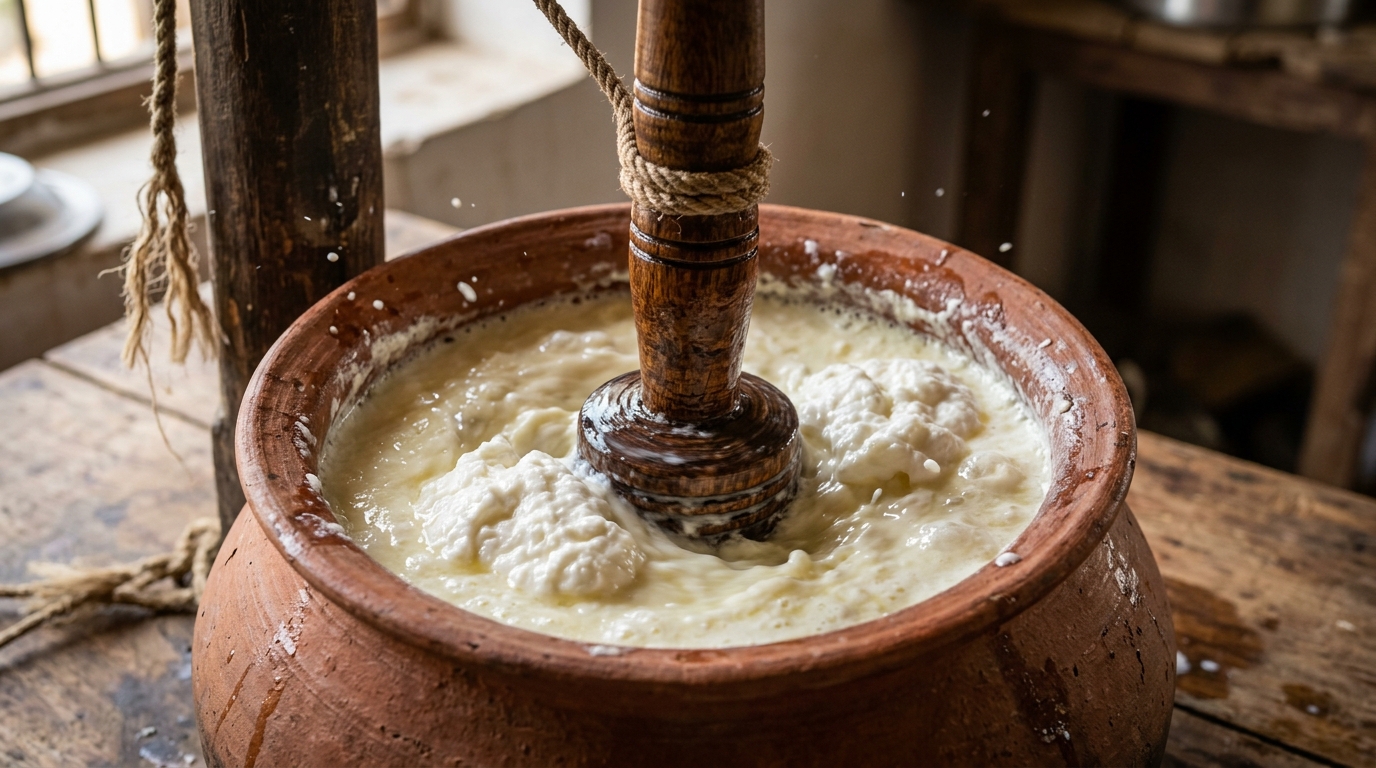
Traditional wooden Valona churner spinning inside earthen curd pot
3. The Saurashtra Terroir: Ideal Climate & Water
The unique dry-arid coastal climate of Saurashtra allows optimal curd fermentation without bacterial spoilage. Combined with natural sweet groundwater, the regional terroir imbues Jamkhambhaliya ghee with its world-famous nutty aroma and extended 12-month shelf life.
4. A Heritage of Global Export
Jamkhambhaliya Ghee has been exported across the Middle East, East Africa, and Southeast Asia for over a century. In traditional Indian sweet-making and Ayurvedic preparations, Jamkhambhaliya ghee is considered the gold standard benchmark for purity.
At ValonaVritti, we preserve this centuries-old heritage. Every jar of our ghee is made direct-from-source in Jamkhambhaliya, offering authentic taste, lab-certified purity, and free doorstep delivery across India.
Taste Authentic Jamkhambhaliya Ghee
Handmade in Devbhumi Dwarka, Gujarat from grass-fed whole milk. Starting at ₹749 (500g) and ₹1,199 (1kg) with free pan-India shipping.